

2026-27 GLOBAL BENCHMARKING STUDY
Measure What Matters. Strengthen What Students Need.
From 2026 through 2027, Big Bad Boo is partnering with schools, ministries of education, and education networks on a global benchmarking study to better understand how we teach and measure SEL, student wellbeing and climate and culture.
We’d love you to be a part of it!
WHAT’S THE BENCHMARKING STUDY?
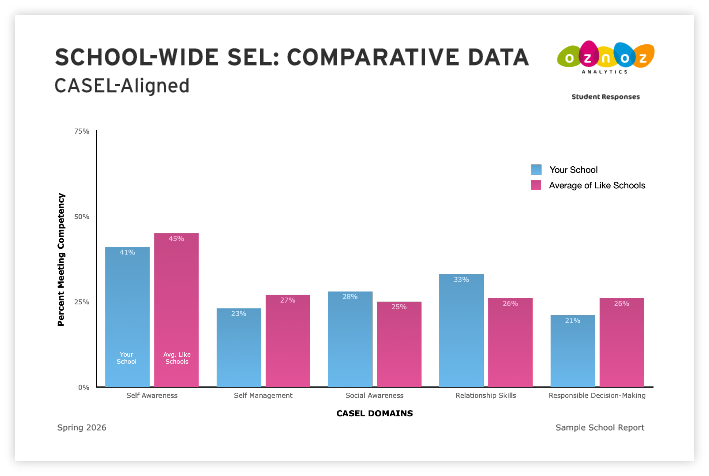
Developed in partnership with AAIE, NAIS and the TRI Association, the Big Bad Boo Benchmarking Study provides schools with a clear evaluation of students’ SEL and citizenship skills, their overall wellbeing, and the climate and culture of their schools, both at a single point in time and across the school year.
Using a 20-minute online assessment for all KG—Grade 5 students, aadministered in the fall, winter, and spring, schools receive robust, detailed reports on specific skills and competencies at both the grade and whole-school levels, benchmarked against similar schools globally. The end-of-year report reliably measures the impact of a school’s current SEL efforts and identifies the skills students are developing as well as those needing additional support.
Schools may use Big Bad Boo’s curriculum resources, their existing SEL programs, or a combination of both.
Optionally, schools can participate in a Spring Snapshot to understand their current SEL landscape and plan intentionally for the upcoming school year.
MEASURING SEL, CITIZENSHIP & WELLBEING FOR IMPACT
Schools invest deeply in SEL programming. What school teams need is a way to connect that investment to measurable outcomes and informed decision-making. Otherwise, essential resources — time, funding, and attention — cannot be aligned intentionally to support students’ social, emotional, and civic development — the foundations of confidence, self-understanding, and meaningful contribution.
Reports Received by Schools
• School- and grade-level results organized by domain and skill area
• CASEL- and OECD-aligned measures, expanded to include citizenship and student wellbeing
• Visual dashboards showing trends across grades and student groups
• Comparative benchmarks based on aggregated data from similar schools
• Analysis informed by leading SEL experts

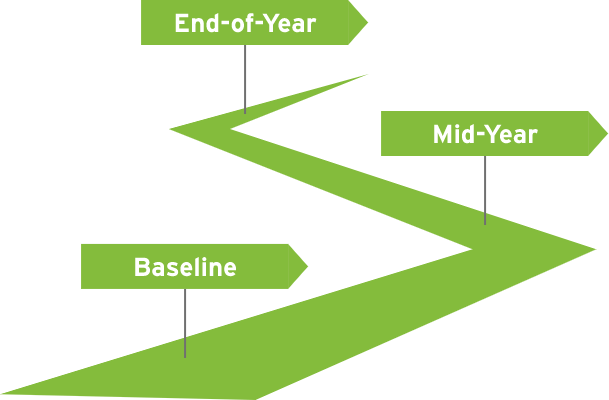
*Three measurement points across the 2026–27 school year
THE 2026–27 BENCHMARKING MODEL
Schools participate in a structured benchmarking cycle with three measurement points across the 2026–27 school year.
This model allows school teams to:
• Establish a baseline
• Monitor development mid-year
• Assess growth by year’s end
• Compare results with aggregated data from similar schools
Open to schools using any SEL curriculum.
CLASSROOM-FRIENDLY IMPLEMENTATION
Designed to meet school realities.
FLEXIBLE FOR CLASSROOMS
Approximately 20 minutes per classroom.
Fits within typical instructional blocks, with teachers selecting the timing that works best for their classrooms.
DEVELOPMENTALLY DESIGNED
K–2:
Image-based assessment with embedded audio to support emerging and multilingual readers
Grades 3–5:
Scenario-based questions grounded in everyday social situations, designed to reflect students’ reasoning, judgment, and values development
Teachers:
Observation-based assessment focused on climate and student behaviors
CLEAR, IMMEDIATE REPORTING
Schools receive results through an interactive dashboard organized by grade, division, and domain.
Structured to surface patterns clearly and support informed decision-making.
PARTICIPATION OPTIONS
SPRING SNAPSHOT
March–June 2026
A 20-minute baseline assessment to:
Evaluate current SEL efforts.
Identify strengths and areas for attention.
Inform planning for the upcoming school year.
BENCHMARKING STUDY
Full 2026–27
Three measurement points across the school year, providing structured insight into student development and school climate over time.
DATA PRIVACY & SCHOOL OWNERSHIP
✔ Fully GDPR-compliant
✔ No individual student data stored
✔ School-level results remain confidential
✔ Schools retain ownership of their data
* Benchmarking occurs through aggregated, anonymized cohorts.

Unsure what is right for your school?