
The number of inclusive shows is down in the US, but there’s still a strong appetite for producers to tell stories about underrepresented communities.
Amid a backlash against DEI in the US and elsewhere, there’s been speculation that diverse representation in kids content has been suffering, and new data from Luminate reveals that the reality is as rough as some feared.
The number of diverse stories produced in the US for kids has been declining since a peak in 2023, according to stats from the entertainment industry data firm. Luminate’s media analyst Tyler Aquilina presented the data yesterday during a panel titled “The DEI Reckoning: What’s left, what’s next, and who’s leading the change?” at Kidscreen Summit in San Diego. In the presentation, Aquilina painted what he called a “doom-and-gloom” picture of the industry.
Things are rough out there
The US government’s anti-DEI agenda has led Disney and PBS to both revise their DEI policies. And when the kids industry awards the Velmas announced their winners in December, the organizers emphasized the fact that there’s been a pullback of LGBTQ+ representation on screen.
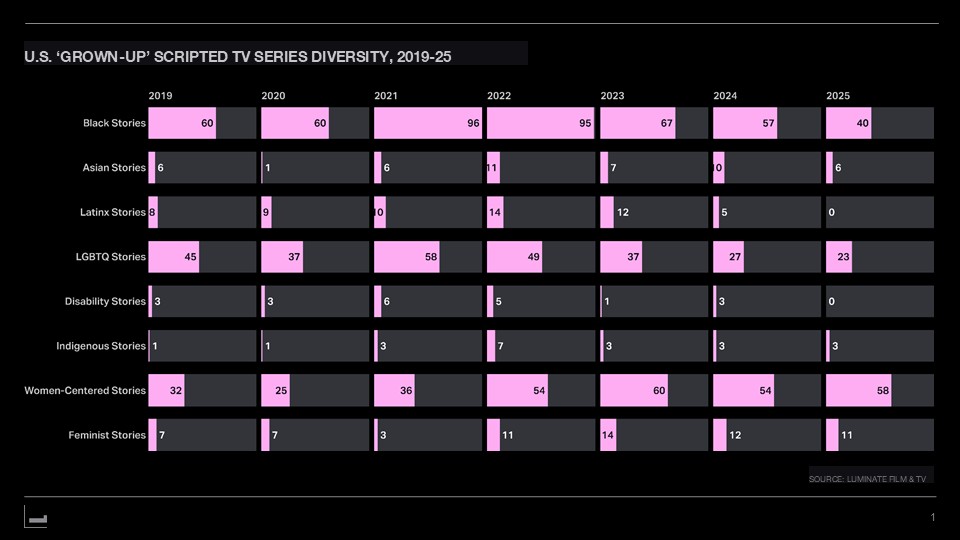
This isn’t just a kids-content issue, though; the number of diverse shows for adults produced in the US are down, as well, including a drop to zero Latin stories in 2025 from five in 2024. The number of Black stories dropped from 10 to six.
Source: Luminate Film & TV
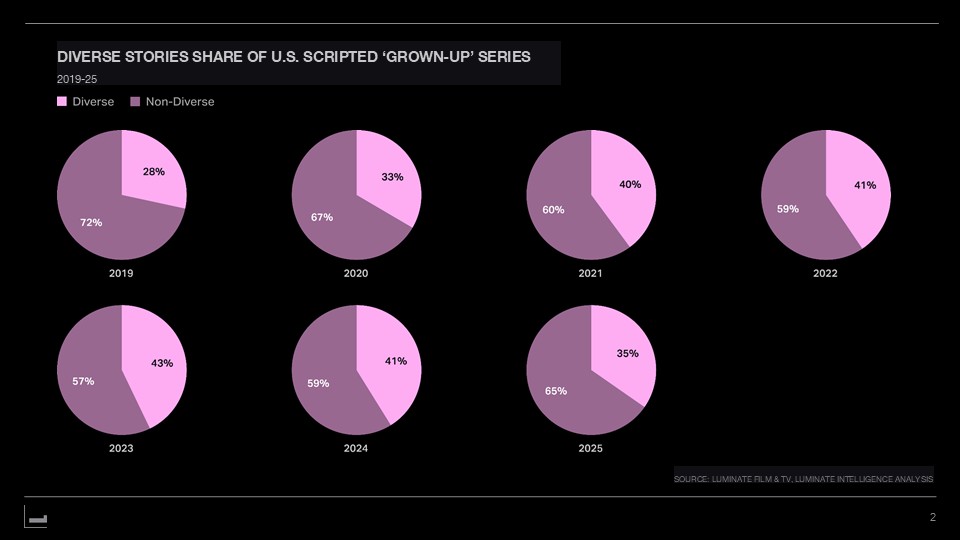
More broadly, in 2025, non-diverse stories made up a 65% share of US scripted series for adults, up from 59% the year before.
Source: Luminate Film & TV
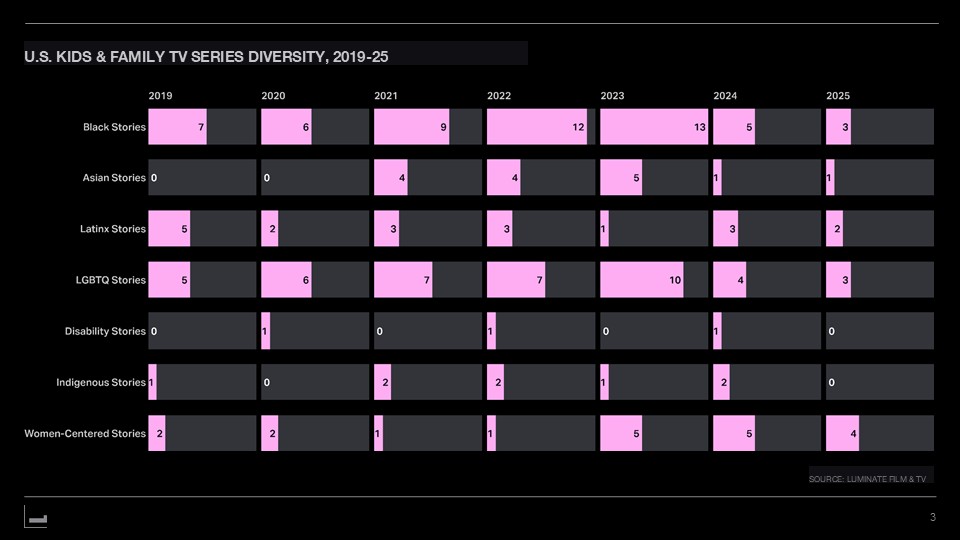
But these trends in older-skewing content are even more pronounced in kids content, says Aquilina. From 2019 onward, 2023 was the peak year for the release of diverse kids series in the US: There were 13 Black stories and 10 LGBTQ ones. New Black stories declined to five in 2024 and then three in 2025.
Source: Luminate Film & TV
Aquilina speculated that the peak in 2023 was in part driven by the push for more diversity and inclusion in programming following the murder of George Floyd in 2020, and it typically takes animation years to get made.
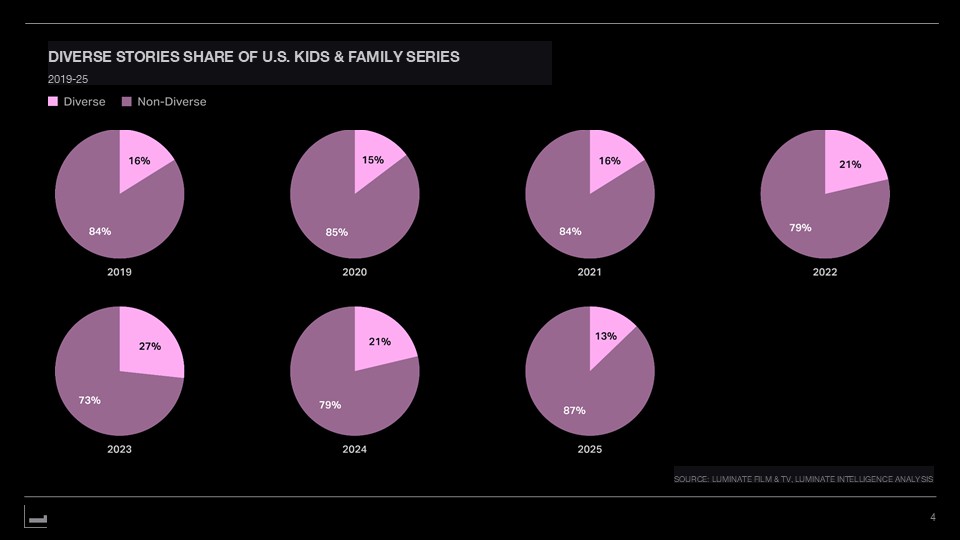
And it’s not just that fewer kids shows are being made overall; Aquilina pointed out that the share of diverse kids shows released in the US was down to 13% in 2025, the lowest point since 2019.
Source: Luminate Film & TV
It’s not all doom and gloom
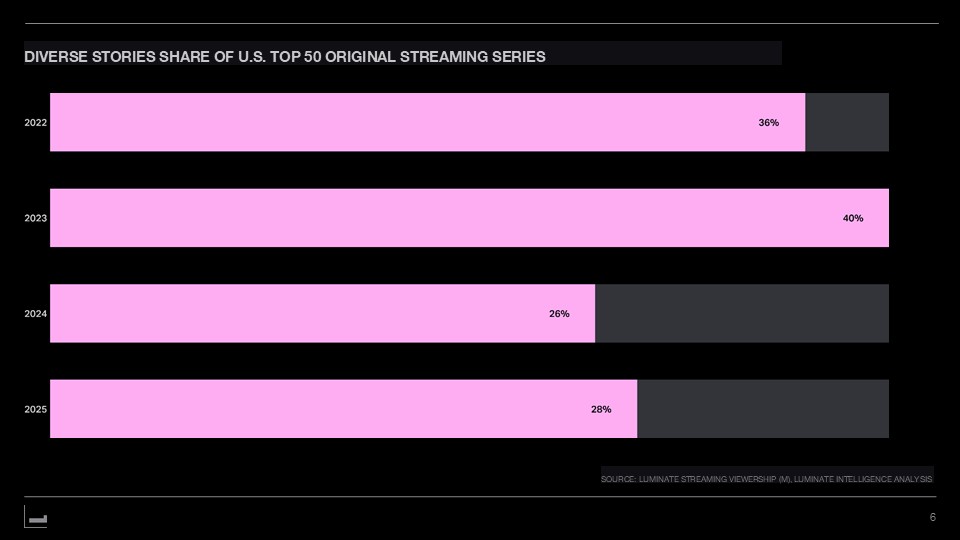
There’s a small ray of hope, though: audiences are still hungry for diverse stories. Despite the declining number of new releases, diverse shows are among the most-watched original series on streamers in the US, Aquilina said. In 2025, 28% of the top 50 original streaming series were diverse stories, up from 26% in 2024. These numbers are down from 40% in 2023, but these types of programs still remain popular.
Source: Luminate Film & TV
“And I think that if studios are willing to make more of these types of shows, then audiences will show up for them, especially if they’re positioned as really big streaming titles, given sizable budgets, given a good marketing push and positioned to succeed,” said Aquilina. “I think that studios will find that audiences are willing to continue to show up for these shows.”
What should diversity look like?
The industry seems to have moved beyond making big, flashy moments out of showcasing representation, like the same-sex wedding featured in Arthur back in 2019. Instead, the kids content producers who were part of the panel have been taking subtler, more nuanced approaches to integrating inclusion into their series, providing blueprints for others to follow.
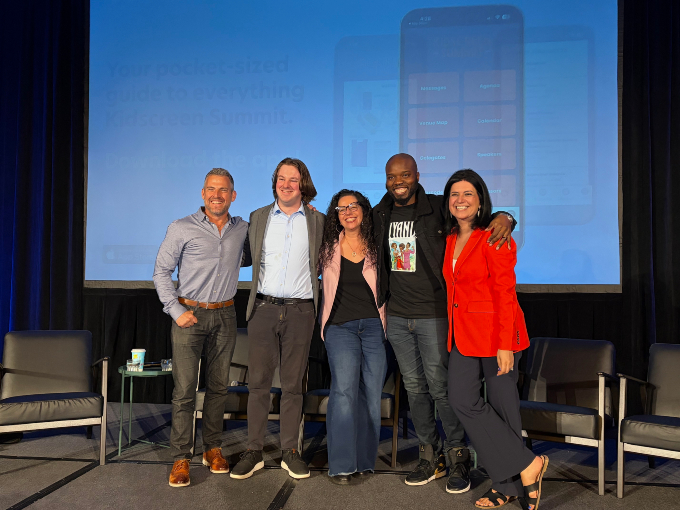
From left, moderator David Levine with analyst Tyler Aquilina and panelists Sadaf Muncy, Roye Okupe and Shabnam Rezaei.
Inspired by its creator Paris Hilton, who has ADHD, the show Paris & Pups highlights and normalizes the disorder, said Sadaf Muncy, EVP of development and production at HappyNest Entertainment. The series, available on YouTube, gives kids and families techniques for coping with symptoms like distractibility and the feelings of shame that those symptoms can cause. The show has two different characters with ADHD, so one can model positive behavior for the other.
Big Bad Boo, meanwhile, has taken a few different approaches, like featuring characters with two dads in the shows 16 Hudson or The Bravest Knight. The studio’s co-founder and president Shabnam Rezaei highlighted the dialogue of The Bravest Knight where, for example, characters gently admonish others for judging people because they’re different.
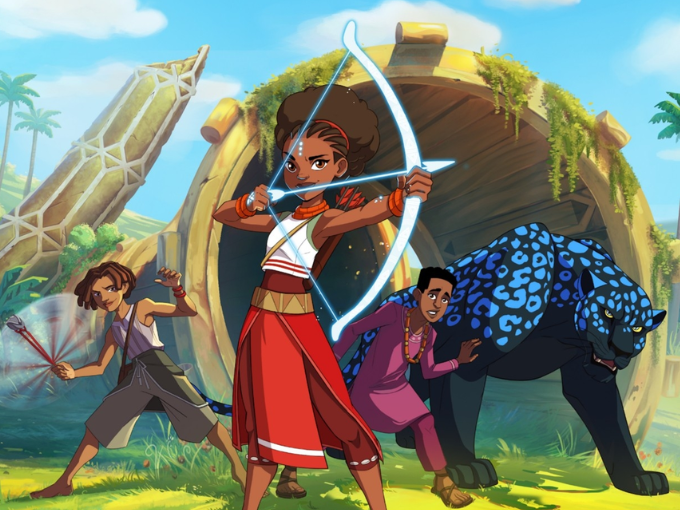
Roye Okupe, creator of the hit Afro-anime series Iyanu (pictured), told the story of his own uphill battle to get the series made at a time before the release of Marvel’s Black Panther—when the market was bereft of African-inspired stories and he was told in meetings time and again that people don’t want to see a show like his. After years of hustle, including crowdfunding his own project and making graphic novels, he secured interest from Lion Forge Animation, HBO Max and Cartoon Network to make the series. Now, a second season of that show is in the works for a spring 2026 premiere. And he’s developing the Afro-anime film, Malika, which is adapted from a graphic novel he wrote.
Okupe said that it was important for his show not to hit people over the head with a message, but instead to create a relatable show rooted in Nigerian culture and history that is just “a great story, period.”
There’s hope
The panelists all agreed that whatever approach a producer takes, more diversity in kids programming is a must. Producers need to remember that there are always going to be opportunities, even if they’re harder to find, says Okupe. He had a message of hope for an industry that’s faced a lot of hardship lately, especially when it comes to representation.
“One of the things that I want to put out there to the world is that people like us need allies,” he says. “Whatever the political situation is, whatever is going on in Hollywood, there will always be good people that want to work with creators from all over the world.”